Trust Infrastructure for Trade Corridors
LobStar helps organizations operating in frontier trade corridors verify counterparties, publish transparent commitments, and coordinate with greater confidence.
Designed for buyers, suppliers, logistics providers, and institutions working across complex cross-border environments—starting with the Lobito Corridor.
Pilot Participants Include
"Bringing coordination infrastructure to frontier corridors where traditional systems fall short."— LobStar Mission Statement
Currency Exchange Alert: Kwanza Volatility
Loading corridor data...
Loading attestations...
Making Corridor Commitments Legible and Verifiable
Trade corridors often fail not because of lack of demand or capacity, but because commitments are opaque, verification is uneven, and coordination relies on informal trust.
LobStar provides a shared intelligence layer where organizations can:
- •Verify counterparties using tiered verification
- •Publish supply, demand, and capacity commitments
- •See how commitments relate across the corridor
- •Identify gaps and coordination risks earlier
LobStar does not execute transactions, move funds, or replace existing logistics or regulatory systems. It improves visibility and trust so existing systems work better.
Organization Verification
Tiered verification framework allowing organizations to signal credibility—from self-declared profiles to manually verified entities, with registry integrations supported as an extension.
Commitment Tracking
Structured representation of supply, demand, and capacity commitments, with time horizons, confidence levels, and audit trails.
Relationship-Aware Trust Signals
Trust indicators informed by organizational history, participation, and observed consistency—designed to support coordination, not credit decisions.
Corridor Intelligence
Aggregated, corridor-level views that highlight mismatches, bottlenecks, and under-served demand without exposing sensitive commercial data.
Why Coordination Breaks Down in Frontier Corridors
In many frontier markets:
Verification systems are fragmented or inaccessible
Commitments are informal and difficult to compare
New entrants struggle to establish credibility
Institutions lack visibility into corridor commitments and coordination signals
LobStar addresses these gaps by standardizing how commitments and trust signals are represented—without requiring changes to how organizations transact or operate.
Starting with the Lobito Corridor
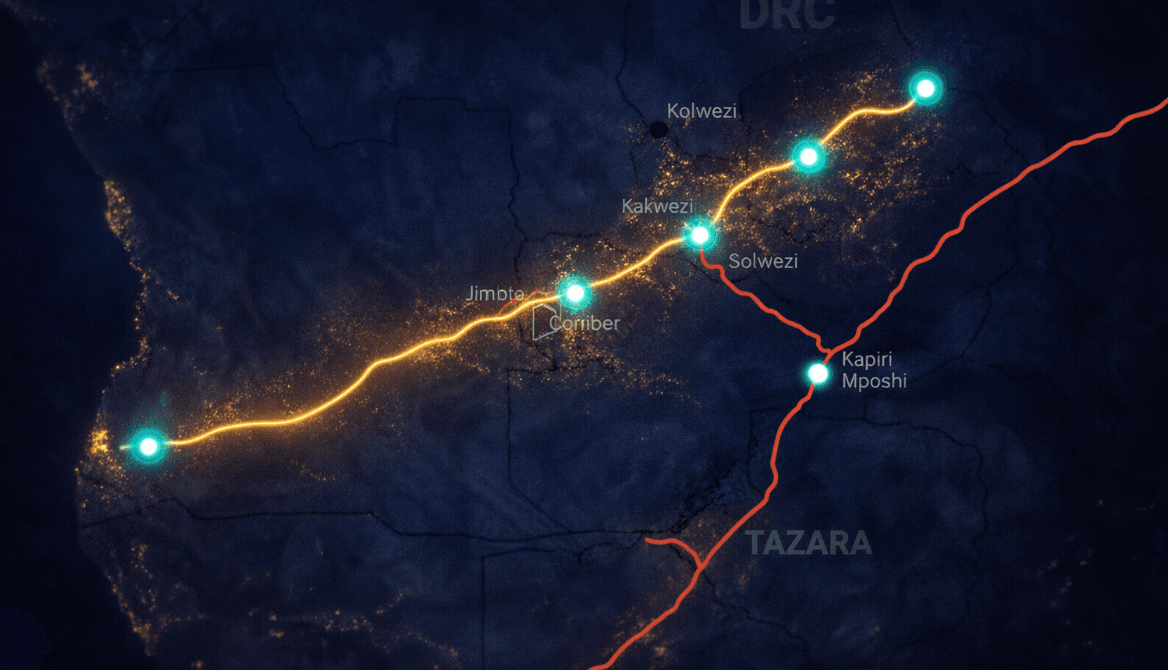
LobStar is being piloted on the Lobito Corridor, connecting actors across Zambia, Angola, and the Democratic Republic of Congo.
This focused deployment allows:
Close collaboration with corridor stakeholders
Iterative refinement of verification and commitment models
Demonstration of value before expansion to other corridors
Future corridors can be added without rebuilding the platform
Clear Scope. No Overreach.
LobStar does not provide financial settlement
LobStar does not replace customs, port, or rail systems
LobStar does not act as a credit bureau
LobStar does not optimize or control logistics flows
Instead, LobStar functions as coordination infrastructure—improving trust, visibility, and alignment among independent actors.
Participate in the LobStar Pilot
LobStar is onboarding a limited group of organizations participating in the Lobito Corridor to test verification workflows, commitment publishing, and corridor-level insights.
Participants include buyers, suppliers, logistics providers, and institutional observers.